Advertising Disclosure: We may earn commissions from purchases made through links in this article. Rankings are based on research, features, and value. This helps support our site at no extra cost to you.
You’ve probably seen it in a weather app:
AQI: 42 or AQI: 165 — sometimes green, sometimes red.
But what does that number actually mean?
Here’s a clear breakdown of how the Air Quality Index works and why it matters for your health.
What Is the Air Quality Index (AQI)?
The Air Quality Index (AQI) is a standardized scale used to measure how clean or polluted the air is — and what that means for human health.
Instead of showing raw pollution data, AQI converts complex measurements into a simple number and color code that tells you how safe the air is to breathe.
The higher the number, the worse the air quality.
AQI Scale and What It Means
Here’s how the scale works:
🟢 0–50: Good
Air quality is satisfactory. Little or no risk.
🟡 51–100: Moderate
Air is acceptable. Some risk for unusually sensitive individuals.
🟠 101–150: Unhealthy for Sensitive Groups
People with asthma, heart or lung conditions may experience symptoms.
🔴 151–200: Unhealthy
Everyone may begin to feel health effects.
🟣 201–300: Very Unhealthy
Serious health effects possible for the general population.
🟤 301–500: Hazardous
Emergency conditions. Avoid outdoor exposure.
Once AQI goes above 100, sensitive groups should limit prolonged outdoor activity.
What Pollutants Does AQI Measure?
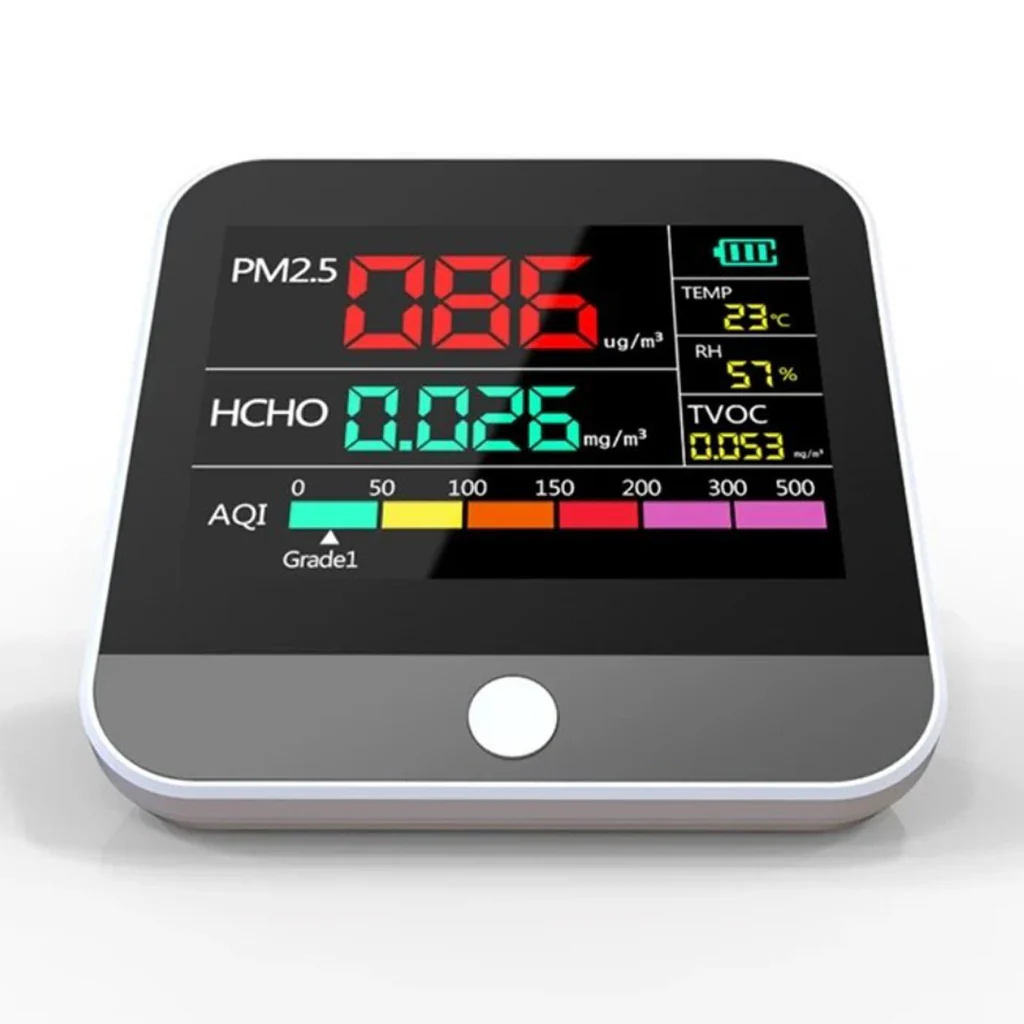
AQI isn’t based on just one pollutant. It usually includes:
- PM2.5 (fine particles)
- PM10 (larger particles)
- Ozone (O₃)
- Carbon monoxide (CO)
- Sulfur dioxide (SO₂)
- Nitrogen dioxide (NO₂)
Among these, PM2.5 is often the biggest concern, especially during wildfire season or in polluted cities.
Fine particles (PM2.5) are small enough to enter deep into the lungs — and even the bloodstream.
Why AQI Matters for Indoor Air
Here’s something many people overlook:
Outdoor AQI directly affects indoor air quality.
If outdoor AQI is high:
- Pollution enters through windows
- HVAC systems pull contaminated air inside
- Indoor particle levels rise
That’s when air purifiers become especially helpful.
High-efficiency HEPA purifiers can reduce indoor PM2.5 levels even when outdoor AQI is poor.
How to Check AQI
You can check AQI through:
- Weather apps
- Government environmental websites
- Air quality monitoring apps
- Smart home air monitors
Many cities update AQI hourly.
If you live in an urban area or wildfire-prone region, checking AQI daily can help you decide when to:
- Keep windows closed
- Run an air purifier
- Avoid outdoor exercise
Indoor AQI vs Outdoor AQI
Outdoor AQI is standardized. Indoor AQI depends on:
- Ventilation
- Cooking emissions
- Pets
- Cleaning chemicals
- Dust levels
Indoor air can sometimes be worse than outdoor air — especially in poorly ventilated homes.
Using an indoor air quality monitor gives a more accurate picture of what you’re actually breathing.
When Should You Be Concerned?
You should take precautions when:
- AQI exceeds 100
- You notice haze or smoke outdoors
- You experience coughing, headaches, or throat irritation
People most at risk:
- Children
- Elderly
- Asthma sufferers
- Heart disease patients
For these groups, even moderate AQI levels can cause discomfort.
How to Protect Yourself When AQI Is High
When outdoor air quality drops:
- Keep doors and windows closed
- Use a HEPA air purifier indoors
- Avoid intense outdoor exercise
- Use N95 masks if necessary outdoors
- Run HVAC on recirculation mode
Reducing exposure is the goal.
Bottom Line
AQI is a simple number that reflects complex air pollution data.
- Lower AQI = cleaner air
- Higher AQI = greater health risk
Understanding AQI helps you make smarter decisions about outdoor activity, ventilation, and whether to run your air purifier.
If you monitor it regularly, you stay ahead of air quality problems instead of reacting to symptoms.
Top 10 Best Air Purifier 2026 Updated List
Stay consistent, and your air purifier will keep delivering clean, breathable air year-round.
“Your experience matters! Share your honest feedback about the air purifier you currently use — including what you like, what could be better, and how it has improved your indoor air quality. Your insights can help other readers make smarter, more confident decisions when choosing the right air purifier for their home.”