Advertising Disclosure: We may earn commissions from purchases made through links in this article. Rankings are based on research, features, and value. This helps support our site at no extra cost to you.
Air purifiers often combine multiple filters, but two of the most common are HEPA and activated carbon. Understanding the difference helps you pick the right purifier for your needs.
What a HEPA Filter Does
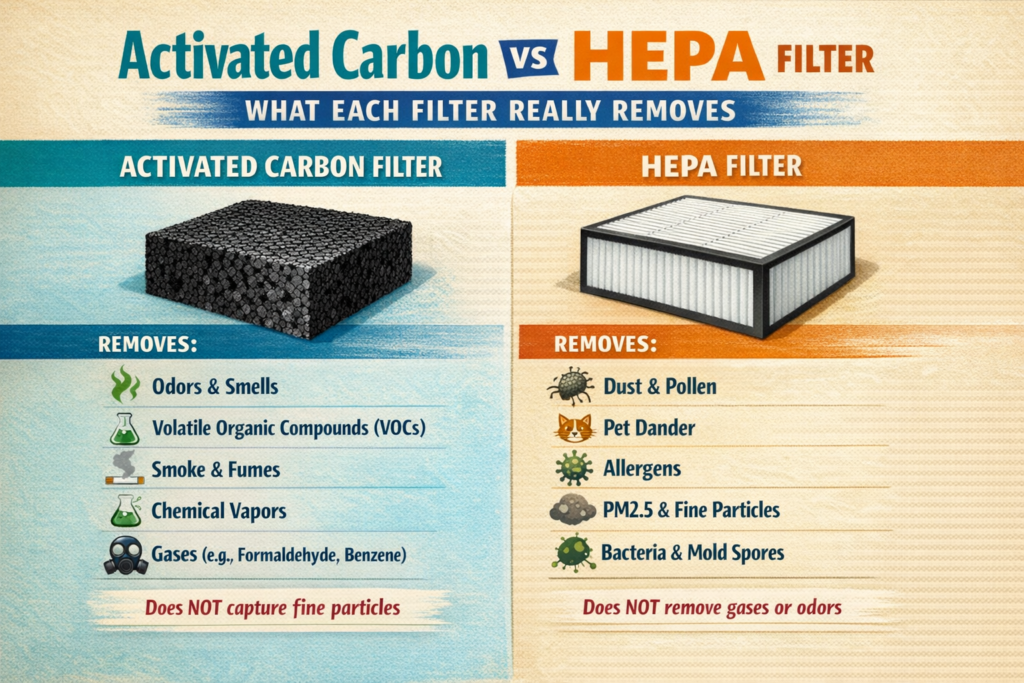
HEPA (High-Efficiency Particulate Air) filters are designed to trap tiny particles from the air.
- Captures 99.97% of particles as small as 0.3 microns
- Removes:
- Dust and dirt
- Pollen and allergens
- Pet dander
- Mold spores
- Some bacteria and viruses carried in airborne droplets
Key point: HEPA filters do not remove odors, gases, or chemical pollutants. They are purely particle-focused.
What an Activated Carbon Filter Does
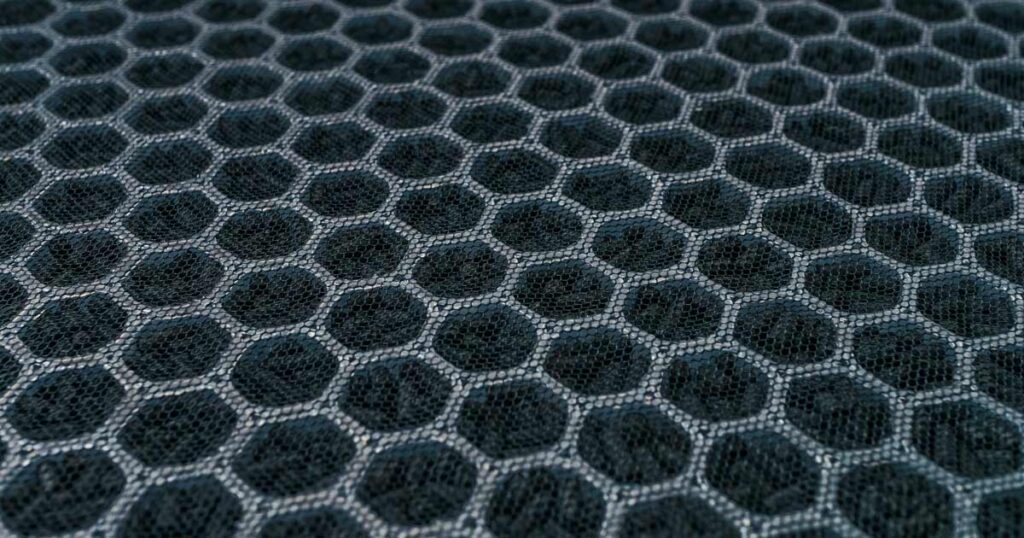
Activated carbon filters use porous charcoal to adsorb gases and odors.
- Removes:
- Smoke
- Cooking odors
- Volatile organic compounds (VOCs) from cleaning products or paints
- Pet smells
- Some chemical pollutants
Key point: Carbon filters cannot capture fine dust or allergens effectively. They complement HEPA filters rather than replace them.
Why Many Purifiers Combine Both
The best air purifiers often feature HEPA + activated carbon filters:
- HEPA handles particles
- Carbon handles odors and gases
- Together, they clean the air more completely
Some high-end models even include:
- Pre-filters for large dust and hair
- UV-C light to deactivate bacteria and viruses
- Ionizers (optional) for extra particle capture
Choosing the Right Filter for Your Needs
| Air Quality Concern | Recommended Filter |
|---|---|
| Allergies (pollen, dust) | HEPA |
| Pet odors or smoke | Activated Carbon |
| Mold spores | HEPA |
| VOCs from cleaning products | Activated Carbon |
| General indoor air cleaning | HEPA + Carbon combo |
Maintenance Matters
- HEPA filters: replace every 6–12 months
- Carbon filters: replace every 3–6 months (depending on odor exposure)
- Always follow manufacturer guidelines for maximum performance
A clogged or old filter reduces air purifier effectiveness, regardless of filter type.
Read Also: How Often Should You Replace Your Air Purifier Filter?
Bottom Lin
- HEPA = removes fine particles and allergens
- Activated carbon = removes odors and gases
- For most homes, a combination of HEPA + carbon provides the most comprehensive air purification.
Choosing the right filters depends on your specific indoor air problems: allergies, pets, smoke, or chemicals.
Top 10 Best Air Purifier 2026 Updated List
Stay consistent, and your air purifier will keep delivering clean, breathable air year-round.
“Your experience matters! Share your honest feedback about the air purifier you currently use — including what you like, what could be better, and how it has improved your indoor air quality. Your insights can help other readers make smarter, more confident decisions when choosing the right air purifier for their home.”